
INDUCTION BRAZING
Induction Brazing Services
Process reliability and high cycle rates
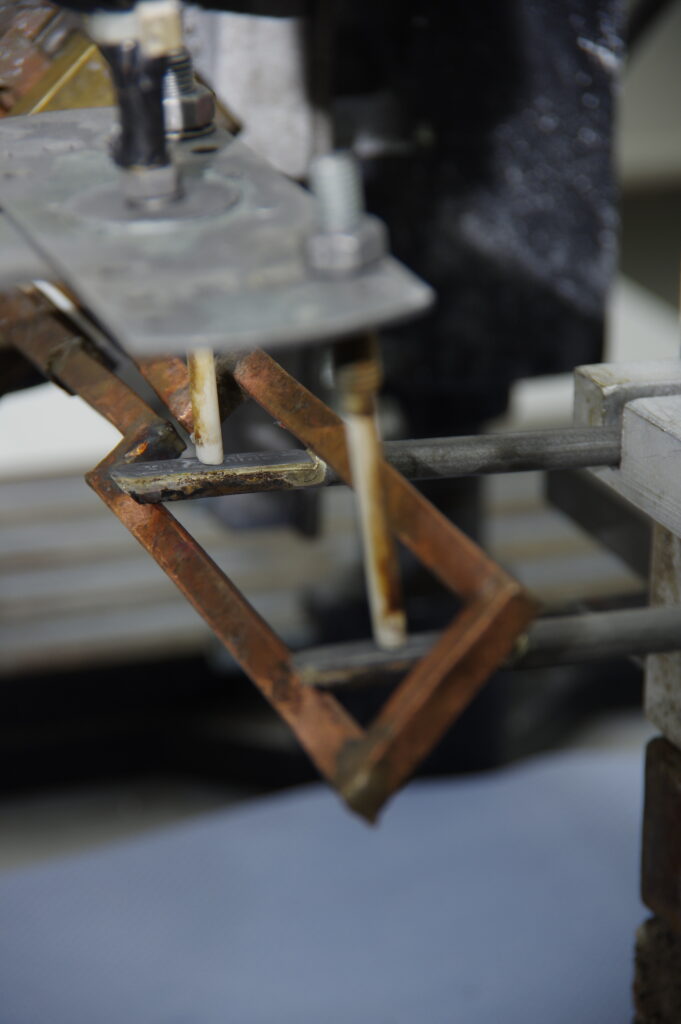
Induction brazing has established itself as a proven alternative to flame or furnace brazing. The precise and localised heat input, combined with an even temperature distribution, enables extremely strong and reproducible joints – even for demanding applications.
Efficient and precise
Fast, localised heating with high energy efficiency and short process times
Consistent high quality
Reliable, strong joints and low oxidation due to short heating times
Flexible production
Suitable for a wide range of materials and ideal for series production
Talk to our brazing specialist.
Have a question about induction brazing or need a tailored quote? Get in touch – we’re happy to discuss your requirements.
Because the coil design is matched precisely to each part’s geometry, energy is delivered only where it is needed, keeping surrounding material unaffected and giving repeatable results from the first part to the last of a series.
At Armin Hain, induction brazing is one of our core contract brazing processes, alongside flame brazing and specialised joining for carbide, PCD and CBN tooling. We braze steel, stainless steel, copper, brass and carbide components for customers across Europe, from single prototype joints to full-scale series production. Typical parts include hydraulic and pneumatic fittings, tool holders, heat exchanger assemblies and other components where a strong, leak-tight joint and consistent cycle times matter.
Every order is processed under our ISO 9001:2015 quality management system, certified by DEKRA Certification GmbH, with full process documentation available on request. Our team, led by master precision-mechanics craftsman Sascha Hain, works from your drawings and specifications to define the right induction brazing parameters, filler metal and fixturing before production begins.
How Induction Brazing Works
The part is placed inside or beside a coil carrying an alternating current, which induces eddy currents directly in the metal at the joint — heating the workpiece itself rather than the surrounding air. Because the coil is shaped to match the joint geometry, heat builds quickly and precisely where it’s needed, the filler metal melts and is drawn into the joint gap by capillary action, and surrounding material stays comparatively cool. This gives short cycle times, low distortion, and results that repeat closely from the first part of a batch to the last — see our brazing glossary for the underlying terms like capillary action and joint gap.
Induction vs. Flame Brazing: Which Fits Your Part
Induction brazing is the better fit once a part geometry is fixed and volumes justify building a coil: it’s faster per cycle, easier to reproduce precisely, and better suited to series production. For one-off parts, repairs, or awkward geometries that don’t suit a coil, our flame brazing service is usually the more economical choice. If your joint needs to stay completely flux-free and oxide-free, we also offer induction brazing under protective atmosphere as a variant of this same process. Not sure which applies to your part? Our brazing FAQ covers this and other common questions.