
FLAME BRAZING
Flame Brazing Services
Flexible, hands-on brazing for every batch size
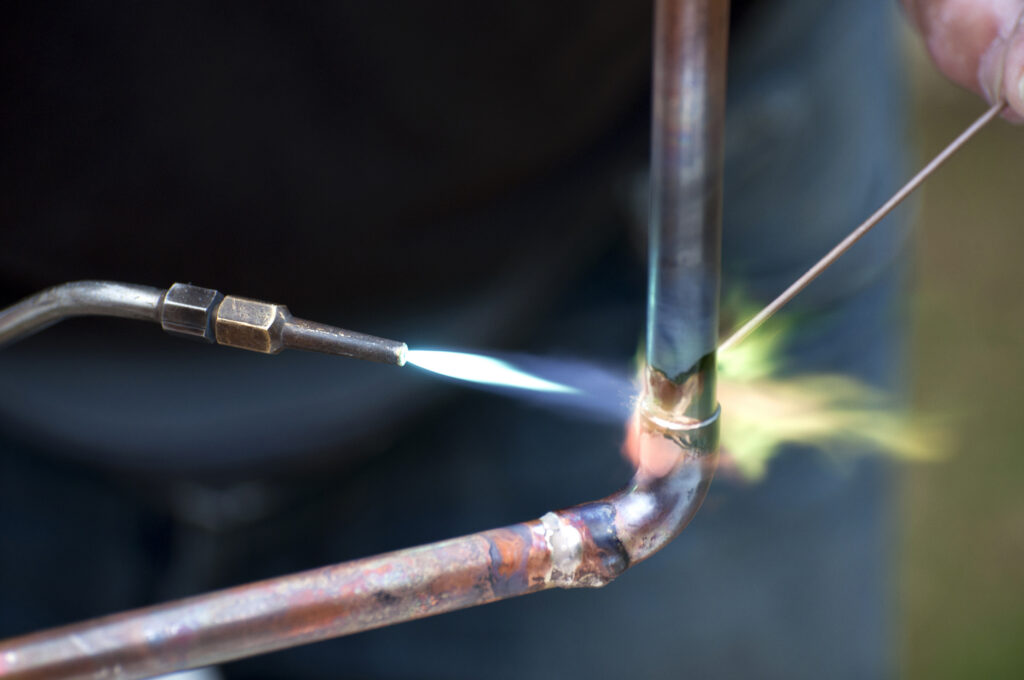
Flame brazing (torch brazing) remains one of the most versatile and cost-effective brazing methods, especially for prototypes, small batches, and components with complex geometries. Using precisely controlled gas flames, our skilled craftsmen join steels, copper, copper alloys and stainless steel with strong, reliable joints. This flexible, manual process is ideal when induction brazing isn’t practical — for one-off parts, repairs, or low-volume production runs.
Flexible and versatile
Suitable for a wide range of shapes, sizes and materials, including complex or irregular components
Skilled craftsmanship
Performed by experienced brazers, allowing precise control over heat input and joint quality
Ideal for small batches
Cost-effective and flexible for prototypes, repairs, and low-volume production
Talk to our brazing specialist.
Have a question about flame brazing or need a tailored quote? Get in touch – we’re happy to discuss your requirements.
We work with hand torches for one-off parts and prototyping, as well as mechanised flame-brazing setups for higher volumes where repeatable flame positioning and cycle times matter.
Flame brazing is one of four core contract brazing processes we offer at Armin Hain, alongside induction brazing, induction brazing under protective atmosphere and PCD/CBN/PCBN brazing. It is our first choice for repair work, mixed-material assemblies, awkward joint geometries that don’t suit a coil, and short-run or one-off orders where building induction tooling would not be economical. Materials we regularly braze this way include steel, stainless steel, copper, brass and aluminium alloys, joined with silver- or copper-based filler metals selected for the base materials and the service conditions of the finished part.
As with all our contract brazing work, flame brazing orders run under our ISO 9001:2015 quality management system, certified by DEKRA Certification GmbH. Send us your drawings and quantities and we’ll confirm feasibility, filler metal choice and lead time before production starts.
Filler Metals and Flux for Flame Brazing
Flame brazing generally requires flux to keep the joint surfaces oxide-free during heating — with one notable exception: copper-to-copper joints made with phosphorus-containing filler metals, which can be brazed flux-free because the phosphorus itself reacts with surface oxides during melting. For every other material combination we braze this way, including steel, stainless steel and copper alloys joined with silver-based filler metals, flux selection is matched to the base metal and service conditions. Our brazing glossary covers flux, filler metals and related terms in more depth.
Typical Applications
Flame brazing is our default choice for repair work on existing brazed assemblies, for mixed-material joints where the parts don’t suit a coil, and for orders too small to justify building induction tooling. It also gives our brazers direct visual control over the joint as it heats — useful for one-off or first-article parts where a process isn’t fully defined yet. For questions on filler metal selection or whether your part suits flame or induction brazing, see our brazing FAQ or send us your drawing directly.