
CARBIDE & PCD/CBN MATERIALS
Carbide & PCD/CBN Materials
Precision brazing for hardmetal, PCD and CBN tooling
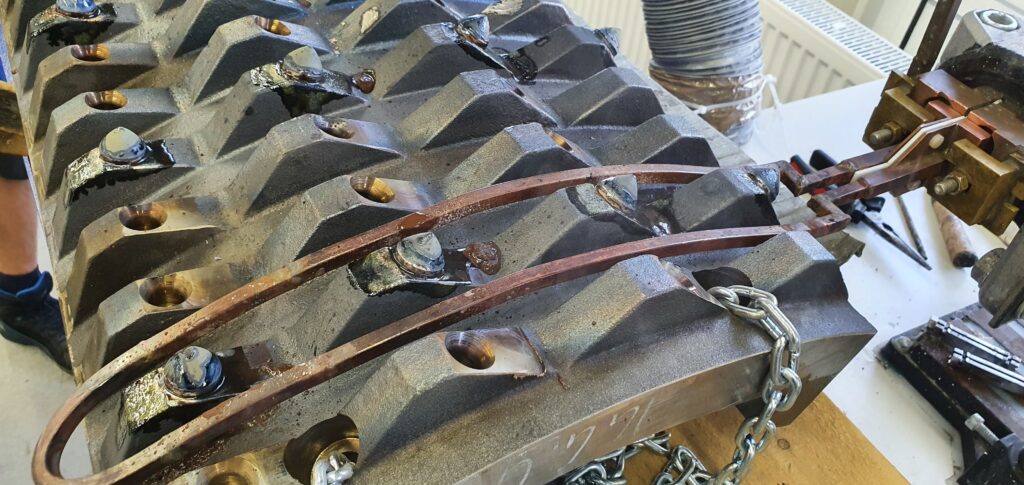
Brazing polycrystalline diamond (PCD) or CBN onto a tungsten carbide carrier is unforgiving: the working temperature of the braze alloy and the maximum temperature the diamond can tolerate sit close together, and getting it wrong means scrap. We’ve developed our own combination of braze alloy and flux for exactly this challenge, and since 2016 have used it to produce PCD tooling for industrial customers on a largely automated, pyrometer-monitored line. As our brazing specialist Sascha Hain puts it: “Induction brazing is still the best method for joining PCD diamonds under atmosphere — when the interplay between braze alloy, flux and temperature is right, no joining technique delivers better results for tool life.”
Purpose-built alloy and flux
Our own AH 30049 braze alloy and AH Flux 120 flux are matched to PCD-on-carbide joints, preventing flux inclusions and maximising joint strength.
Induction brazing under close control
We heat to the precise brazing temperature (around 690°C for PCD) using induction heating with PLC-based temperature monitoring, for a consistent, process-secure result.
CBN and PCD, production-proven
Beyond PCD, we also braze CBN tooling, including complex geometries with pyrometer temperature monitoring, and have produced PCD tools in series since 2016.
Have a hardmetal, PCD or CBN component to braze?
Send us your drawing or a sample — we’ll work out the right braze alloy, flux and heating method for your tooling.
Beyond PCD and CBN tooling, we also braze tungsten carbide tips and inserts onto steel tool bodies for cutting, forming and wear-part applications, where the joint has to survive both the brazing cycle and years of mechanical load in service. Because carbide and PCD/CBN each behave differently under heat, we select the braze alloy, flux and heating profile per material combination rather than running a single standard recipe across all jobs.
This work is carried out under our ISO 9001:2015 quality management system, certified by DEKRA Certification GmbH, with process parameters documented for every batch. We support customers from initial feasibility trials on a handful of tips through to ongoing series production, and welcome technically detailed enquiries from tool manufacturers working with unusual carbide grades or diamond specifications.
Why PCD and CBN Joints Need Layered Filler Metals
PCD, CBN and tungsten carbide expand and contract at different rates than the steel or carbide bodies they’re brazed to. Left unmanaged, that mismatch builds up internal stress as the joint cools and can crack the diamond or CBN segment. For these joints we use layered filler metals — copper or nickel mesh clad on both sides with braze alloy — which absorb much of that stress instead of transmitting it into the brittle cutting material. See our brazing glossary for more on layered filler metals and other terms specific to hardmetal and superhard-material brazing.
From Feasibility Sample to Series Production
Most new PCD or CBN tooling jobs start with a small batch of feasibility samples, brazed and checked before we commit to a full production run — this lets us confirm braze alloy, flux and temperature profile are right for your specific carbide grade and diamond or CBN specification before volumes scale up. Once confirmed, the same parameters carry directly into our pyrometer-monitored series production. If your project needs process development first, our brazing development & prototyping service covers exactly this stage.